The Intersection of Science and Art in Unexplained Aerial Phenomena: Where Wonder Meets Investigation 🛸
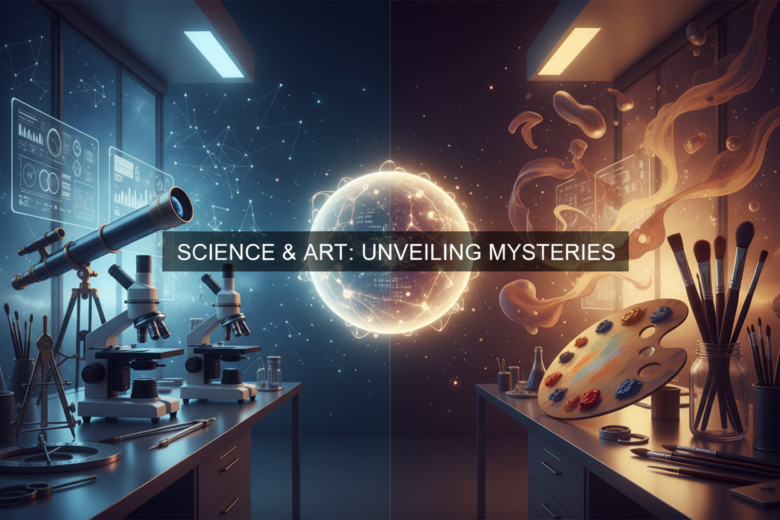
When we gaze up at the night sky and witness something that defies explanation, we’re experiencing one of humanity’s most profound moments – the collision between scientific curiosity and artistic wonder. Unexplained aerial phenomena (UAP), formerly known as UFOs, have captivated both researchers and artists for decades, creating a fascinating intersection where rigorous investigation meets creative expression. This unique convergence has shaped how we document, interpret, and understand these mysterious encounters that continue to puzzle experts worldwide.
From ancient cave paintings depicting strange objects in the sky to modern digital art inspired by recent Pentagon disclosures, the relationship between science and art in UAP research reveals something deeper about human nature itself. We’re creatures who need both empirical data and emotional connection to make sense of the inexplicable. Today, as we stand at the threshold of potentially groundbreaking revelations about aerial phenomena, this intersection has never been more relevant or intriguing.
Table of Contents
• Historical Documentation: Art as Scientific Record
• Modern UAP Research: The Scientific Approach
• Artistic Interpretation: Bridging the Gap Between Data and Understanding
• Technology’s Role in Capturing the Unexplained
• The Psychology Behind UAP Encounters
• Cultural Impact and Media Representation
• Future Implications for Science and Art
Historical Documentation: Art as Scientific Record 📜
Long before we had sophisticated radar systems and high-definition cameras, humans relied on artistic documentation to record unexplained aerial phenomena. Medieval paintings often featured mysterious disc-shaped objects in religious scenes, while Renaissance artists incorporated strange aerial phenomena into their masterpieces. These weren’t necessarily intended as UFO documentation – but they represent some of our earliest attempts to visually catalog unusual sky events.
Consider the famous 1561 woodcut from Nuremberg, Germany, which depicts a “celestial battle” with cylindrical and spherical objects filling the sky. While skeptics argue these represent meteorological phenomena or artistic symbolism, the detailed nature of the illustration demonstrates how art served as our primary scientific recording method for centuries. The artist wasn’t just creating pretty pictures – they were documenting what they believed to be real events with the precision of a field researcher.
This historical perspective reveals something crucial: the line between artistic expression and scientific observation has always been blurred when it comes to aerial phenomena. Ancient astronomers were often artists, and artists frequently served as the era’s most meticulous observers of natural phenomena.
Modern UAP Research: The Scientific Approach 🔬
Today’s UAP research represents a dramatic shift toward rigorous scientific methodology. Organizations like the Pentagon’s All-domain Anomaly Resolution Office (AARO) and NASA’s UAP study team employ sophisticated instruments, data analysis, and peer review processes that would make any scientist proud. We’re no longer relying solely on eyewitness accounts and artistic interpretations – we have radar data, infrared footage, and multi-sensor observations.
The scientific community’s growing acceptance of UAP research as a legitimate field of study marks a significant cultural shift. Researchers like Dr. Avi Loeb at Harvard and Dr. Gary Nolan at Stanford have brought academic credibility to what was once considered fringe science. Their work emphasizes the importance of applying the same rigorous standards used in any other scientific discipline.
However, even with all our technological advances, scientists still face the challenge of studying phenomena that are, by definition, unexplained. This is where the artistic mindset becomes invaluable – the ability to think creatively, to consider possibilities beyond conventional frameworks, and to communicate complex ideas in accessible ways.
Artistic Interpretation: Bridging the Gap Between Data and Understanding 🎨
While scientists collect data, artists help us process and understand what that data might mean. Contemporary artists working with UAP themes aren’t just creating science fiction fantasies – they’re exploring the philosophical and emotional implications of potential contact with non-human intelligence. Their work helps us grapple with questions that pure data cannot answer: What would it mean for humanity? How would it change our perception of ourselves and our place in the universe?
Artists like Trevor Paglen have created installations that visualize classified satellite networks and surveillance systems, making invisible government activities tangible and comprehensible. Similarly, UAP-inspired art helps make the abstract concept of unexplained phenomena more concrete and emotionally accessible to the general public.
The creative process also offers unique insights that complement scientific investigation. Artists often notice patterns, connections, and possibilities that researchers might overlook. They ask “what if” questions that can lead to new research directions and hypotheses. In many ways, artistic interpretation serves as a form of cognitive enhancement for scientific inquiry.
Technology’s Role in Capturing the Unexplained 📱
Modern technology has revolutionized both scientific UAP research and artistic documentation. High-resolution cameras, thermal imaging, and sophisticated sensors provide unprecedented detail about aerial phenomena. Simultaneously, digital art tools allow artists to create increasingly realistic and detailed interpretations of UAP encounters.
The democratization of technology means that citizen scientists and artists now have access to tools that were once exclusive to government agencies. Smartphone apps can detect electromagnetic anomalies, while accessible software enables detailed analysis of video footage. This has created a new category of researcher-artists who combine scientific methodology with creative insight.
Artificial intelligence and machine learning are also playing growing roles in both domains. AI can analyze vast amounts of UAP data for patterns humans might miss, while also generating artistic interpretations based on witness descriptions and sensor data. This technological convergence is creating new possibilities for understanding and representing unexplained phenomena.
The Psychology Behind UAP Encounters 🧠
Understanding UAP phenomena requires examining not just the physical evidence, but also the psychological and perceptual aspects of encounters. This is where science and art naturally intersect – both disciplines deal with human perception, memory, and the challenge of accurately representing reality.
Cognitive scientists study how witnesses process and remember unusual events, while artists explore how to visually represent experiences that may exist at the edges of human perception. Both approaches recognize that our understanding of reality is filtered through subjective human consciousness, making objective analysis challenging but not impossible.
The emotional impact of UAP encounters – the sense of wonder, fear, or transformation that witnesses often describe – is something that pure scientific data cannot capture. Artistic representation helps preserve and communicate these crucial psychological dimensions of the phenomenon.
Cultural Impact and Media Representation 📺
The intersection of science and art in UAP research has profound cultural implications. How we represent these phenomena in art, film, and media shapes public perception and, consequently, the level of scientific attention and funding they receive. Positive, thoughtful artistic representations can help destigmatize UAP research, while sensationalized portrayals can undermine serious scientific inquiry.
Recent films and documentaries have attempted to balance entertainment value with scientific accuracy, reflecting a growing sophistication in how we approach UAP topics culturally. This evolution mirrors the broader acceptance of UAP research within academic and government circles.
Artists and scientists working in this field often find themselves serving as cultural ambassadors, helping bridge the gap between specialized research and public understanding. Their collaborative efforts help ensure that UAP discourse remains grounded in evidence while acknowledging the profound implications of potential discoveries.
Future Implications for Science and Art 🚀
As UAP research continues to gain legitimacy and funding, we’re likely to see even greater collaboration between scientific and artistic communities. Future research projects may routinely include artists as team members, recognizing their unique contributions to observation, interpretation, and communication.
Virtual and augmented reality technologies will create new possibilities for both scientific visualization and artistic expression. Imagine being able to step inside a UAP encounter, experiencing it from multiple perspectives while surrounded by all available sensor data. This kind of immersive analysis could reveal insights impossible to achieve through traditional methods.
The potential discovery of definitive evidence for non-human technology would fundamentally change both scientific and artistic paradigms. Artists would play crucial roles in helping humanity process and adapt to such revelations, while scientists would need creative thinking to understand technologies that might operate on completely different principles than our own.
Frequently Asked Questions
How do scientists maintain objectivity when studying UAP phenomena?
Scientists use rigorous peer review, multiple independent observations, and standardized measurement protocols to minimize bias. They also acknowledge the limitations of current technology and understanding while remaining open to evidence-based conclusions.
Can artistic interpretation interfere with scientific accuracy?
While artistic interpretation can sometimes introduce bias, it more often enhances scientific understanding by providing new perspectives and helping communicate complex ideas to broader audiences. The key is maintaining clear distinctions between data and interpretation.
What role does technology play in modern UAP research?
Technology provides unprecedented capabilities for detection, measurement, and analysis of aerial phenomena. From advanced radar systems to AI-powered pattern recognition, modern tools enable more precise and comprehensive investigation than ever before.
How has government disclosure affected UAP research?
Recent government acknowledgments of UAP phenomena have legitimized the field, attracting more serious scientists and funding. This has accelerated research while also increasing public interest and artistic exploration of UAP themes.
What can we expect from future UAP research?
Future research will likely involve greater international cooperation, more sophisticated detection networks, and increased collaboration between scientific and artistic communities. We may also see breakthrough discoveries that fundamentally change our understanding of physics and our place in the universe.
The intersection of science and art in unexplained aerial phenomena research represents one of humanity’s most fascinating collaborative endeavors. As we continue to investigate these mysterious encounters, we’re not just seeking answers about strange objects in the sky – we’re exploring the very nature of reality, consciousness, and our place in the cosmos. Whether through precise scientific measurement or evocative artistic expression, both approaches contribute essential pieces to this cosmic puzzle. The future of UAP research lies not in choosing between science and art, but in embracing their powerful synergy to unlock mysteries that have captivated human imagination for millennia. 🌟
Looking for a side hustle
Check out one of the best around atm