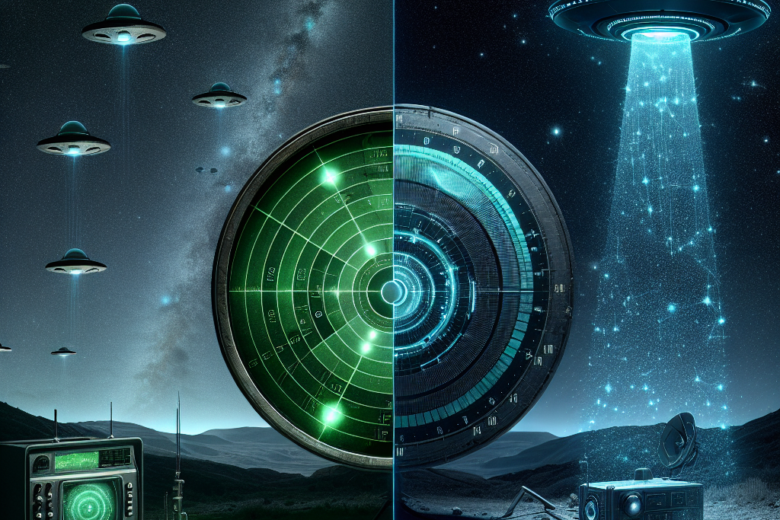
The Transformation of UFO Detection Technology Over Time
Unidentified Flying Objects, or UFOs, have fascinated humanity for decades. From whispered tales of mysterious lights in the sky to full-fledged conspiracies, the allure of the unknown has sparked countless debates and investigations. But how has technology transformed our ability to detect and understand these celestial phenomena? Let’s journey through time to explore the evolution of UFO detection technology.
Table of Contents
1. Introduction
2. Early UFO Detection Methods
3. The Advent of Radar Technology
4. The Digital Age and Advanced Detection Tools
5. Modern-Day Innovations in UFO Detection
6. The Future of UFO Detection Technology
7. FAQs
8. Conclusion
Early UFO Detection Methods
In the early days, long before technology took center stage, UFO detection relied heavily on personal accounts and anecdotal evidence. People reported sightings based on visual observations, often leading to a mix of skepticism and intrigue. These early methods were primarily dependent on the naked eye and individual interpretation, which, albeit romantic, were highly subjective and prone to error.
The Advent of Radar Technology
The mid-20th century marked a significant shift in UFO detection with the advent of radar technology. Initially designed for military use during World War II, radar systems inadvertently picked up unexplained aerial phenomena. These radar blips provided the first concrete, though still mysterious, evidence of UFOs. Suddenly, the conversation shifted from mere speculation to potential scientific inquiry.
Radar offered a new layer of credibility to UFO sightings, allowing researchers to document their presence with precision. This leap in technology paved the way for more structured investigations and a deeper understanding of what might be traversing our skies.

The Digital Age and Advanced Detection Tools
As technology evolved, so did our ability to detect UFOs. The digital age brought with it a plethora of advanced tools that transformed UFO detection into a more rigorous scientific endeavor. Infrared cameras, satellite imagery, and high-resolution video equipment became vital in capturing and analyzing UFO sightings.
These technologies allowed for the collection of data that could be meticulously examined, and hypotheses could be tested with greater accuracy. The ability to capture real-time footage marked a turning point, offering insights that were previously unimaginable.
Modern-Day Innovations in UFO Detection
Today, the field of UFO detection is more advanced than ever. The integration of artificial intelligence and machine learning has revolutionized the way we interpret data. AI algorithms can process vast amounts of information, identifying patterns and anomalies that might elude the human eye.
Moreover, the proliferation of mobile technology has empowered everyday citizens to participate in UFO detection. With smartphones equipped with high-quality cameras and GPS capabilities, anyone can document sightings, contributing to a growing database of information.
The use of drones and autonomous flying vehicles further expands our capabilities, allowing for aerial perspectives that were once the stuff of science fiction. These innovations have democratized UFO research, making it more accessible and collaborative than ever before.
The Future of UFO Detection Technology
As we look to the future, the possibilities for UFO detection technology seem boundless. Advances in quantum computing and space exploration hold the potential to unlock new frontiers in our understanding of unidentified aerial phenomena.
The collaboration between governments, private companies, and civilian researchers is likely to intensify, fostering an era of unprecedented discovery. As technology continues to advance, we may finally unravel the mysteries that have captivated us for generations.
FAQs
Q: How has technology changed our understanding of UFOs?
A: Technology has enabled us to collect and analyze data more accurately, transforming UFO research from speculative to scientific.
Q: What role does artificial intelligence play in UFO detection?
A: AI helps process large datasets, identifying patterns and anomalies that might indicate UFO activity.
Q: Can regular people contribute to UFO research?
A: Absolutely! With smartphones and apps, anyone can document sightings and contribute to UFO databases.
Conclusion
The transformation of UFO detection technology over time showcases humanity’s relentless pursuit of knowledge. From the humble beginnings of eyewitness accounts to the sophisticated tools of today, our journey reflects a deep-seated curiosity about the universe and our place within it. As we continue to push the boundaries of technology, the sky is quite literally the limit. 🚀
Looking for a side hustle
Check out one of the best around atm